How to sleep after a c-section: positions, pillows, and what actually helps
Figuring out how to sleep after a c-section is one of the first
challenges you’ll face as you recover — and one nobody really
prepares you for.
Quick answer:
The safest and most comfortable sleeping position after a c-section
is on your back with your upper body slightly elevated, using 1–2
pillows under your knees to take pressure off your incision. Once
pain allows — usually around weeks 1–2 — side sleeping with a pillow
between your knees and one supporting your belly is also a great
option. Most mamas find comfort gets meaningfully better between
weeks 2 and 4. Keep reading for positions, pillow setups, and tips
for getting in and out of bed safely.
Bringing a new life into the world is extraordinary — but recovery after birth, especially after a c-section, is real work. Whether your caesarean section (c-section) was planned or unexpected, it’s important to remember that you just went through major abdominal surgery, and your body needs thoughtful support to heal. One of the most common questions in the early days is simple but surprisingly tricky: how do you actually sleep after giving birth? Between incision discomfort, limited mobility, and caring for a newborn, finding a way to sleep comfortably and safely after a c-section can feel overwhelming. In this guide, we break down practical strategies to help you rest, recover, and get the sleep your body needs after a c-section.
The best sleeping positions after A c-section
Finding a comfortable and safe sleeping position after a c-section can feel surprisingly challenging. But when it comes to postpartum recovery, sleep truly is the foundation. Of course, caring for a newborn while trying to get meaningful rest is easier said than done — especially when your body is also healing from major surgery. The good news: small adjustments to how you position your body can make a big difference. Below are a few sleeping positions after a c-section that can help you get more restful sleep while protecting your recovery.
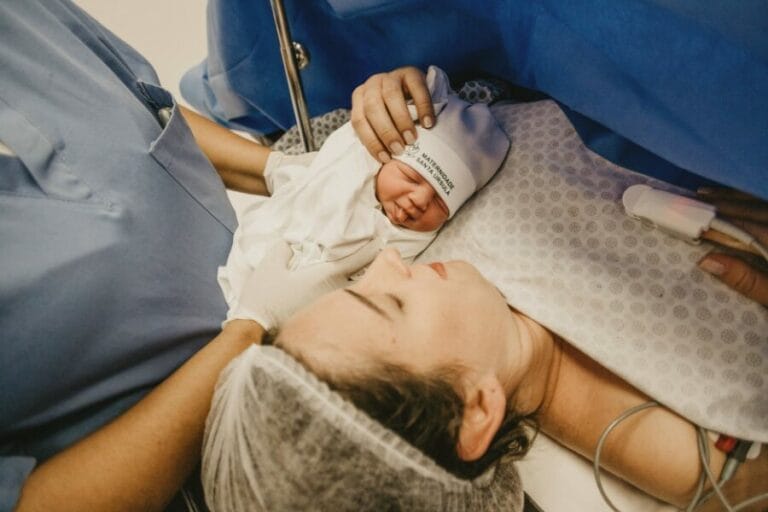
Sleeping on your back
Sleeping on your back after a c-section is often the most comfortable position in the early days of recovery. If you were someone who naturally slept on your back before pregnancy, this position may feel especially welcome — particularly since maternal health experts advise avoiding lying flat on your back during pregnancy. Back sleeping helps reduce pressure on your incision site and allows your body to fully relax while it heals from major abdominal surgery. For extra comfort, try placing a pillow under your knees to support your lower back and reduce strain while you rest.
When can you sleep on your side after a c-section?
Once your mobility starts to improve, side sleeping after a c-section may begin to feel more manageable. That said, getting into position can still take some patience. Be mindful of your body mechanics when changing positions so you don’t place unnecessary strain on your incision site. While sleeping on your side may feel uncomfortable in the very early days after surgery, it often becomes one of the most supportive positions as your body heals and turning becomes less painful. This position can help reduce pressure on your incision and may even support digestion as your system resets after birth. To make it more comfortable, use pillows for support — place one between your knees and another under your belly to help maintain spinal alignment and create a position that feels stable and restorative.
How to use pillows to get comfortable
Sleeping in a propped or slightly upright position can be surprisingly helpful in the early days after a c-section. If lying flat feels uncomfortable, try propping yourself up with pillows or resting in a recliner to support a more elevated upper body. This position can make breathing feel easier during sleep, reduce pressure and discomfort around your incision, and often makes it much simpler to get in and out of bed. For many women, a supported, upright position becomes one of the most manageable ways to rest during the first phase of postpartum healing.

Sleep Positions & Movements to Avoid for Optimal C-Section recovery
- Sleeping on Your Stomach: This can put undue pressure on your incision and cause pain.
- Heavy Lifting: Avoid lifting anything heavier than your baby to prevent strain.
- Twisting Movements: Be cautious with sudden movements to protect your healing body.
Tips for Restful Sleep After A C-Section
Remember Self-Care is Caring for Your Family
When a newborn arrives, it’s easy for your own needs to fall to the bottom of the list. But postpartum recovery, especially after a c-section, requires real care and attention. Taking care of yourself isn’t separate from caring for your family — it’s part of it. Rest is essential for both physical and mental healing, yet many mothers push through exhaustion and unintentionally slow their recovery. Sometimes self-care looks like protecting a good night’s sleep by creating a simple sleep routine with your partner so you can get longer stretches of rest. Other times it’s smaller: a few quiet minutes to reset, or allowing yourself to ask for support when you need it. This season of motherhood often asks you to receive care as much as you give it. One day, you may find yourself offering that same support to another mother navigating sleep after a c-section. Self-care isn’t selfish — it’s preservation, allowing you to show up for your family without running on empty.

Practice Good Sleep Hygiene as Part of your C-Section Recovery
Getting quality sleep after a cesarean birth can feel like an impossible ask in the early weeks. Your body is recovering from major abdominal surgery, hormones are shifting rapidly, and you’re learning the rhythms of a newborn. While uninterrupted sleep may not be realistic right away, supporting your body with strong sleep hygiene habits can make a meaningful difference in how easily you fall asleep and how restorative your rest becomes.
If postpartum sleep feels elusive, these small adjustments can help support better rest and recovery.
Create a Consistent Rhythm
Your body’s circadian rhythm and hormone regulation respond well to consistency. Aim to go to bed and wake up at roughly the same time each day, even if it falls within a one-hour window (for example, bedtime between 8–9pm and waking between 7–8am). A simple wind-down ritual can also signal to your nervous system that it’s time to transition into rest. This might look like a short meditation, reading a few pages of a book, sipping herbal tea, or a calming skincare routine.
Design a Recovery-Friendly Sleep Environment
In the early postpartum weeks, your bedroom should function as a healing space. Keep the room cool, quiet, and dim whenever possible. Reducing devices in the bedroom can limit unnecessary stimulation. If your baby sleeps nearby in a bedside bassinet, a sound machine can help soften the small noises that might otherwise wake you between sleep cycles. Small details—like supportive pillows or breathable bedding—can also make a surprising difference in comfort as your body heals from a c-section.
Protect Your Evenings From Blue Light
Exposure to blue light from phones, tablets, and TVs can stimulate the brain right when you’re trying to wind down. Try to limit screens for about an hour before bed when possible. Late-night scrolling can act almost like an espresso shot for the brain, making it harder to fall asleep and reducing sleep quality. Protecting your sleep is particularly important during the postpartum period, as chronic sleep disruption is associated with a higher risk of perinatal mood and anxiety disorders.

Before Your Cesarean: Prepping for Postpartum Sleep
Share Your Worries and Make a Plan
Before birth, consider talking with your healthcare provider and support system about sleep concerns and what recovery after a c-section may look like and how you can protect your rest in the early weeks. Having a simple plan in place can ease anxiety and help the transition feel more manageable. Sleep after a c-section will likely feel different at first — your body is healing while you’re also caring for a newborn. But with the right expectations, support, and a few practical strategies, you can create a rhythm that helps protect the rest your body needs during this important stage of recovery.
Products That Can Help You Get Higher Sleep Quality
Consider investing in products designed to improve comfort and aid in recovery:
- Maternity Pillows: These can provide support during sleep and give you more options when it comes to positioning. Invest in pillows to make the positioning mentioned above more attainable depending on your preference or a sleep position promotes optimal blood flow and allows you to combat sleep problems stemming from discomfort.
- Belly Bands: These can help support your abdomen and reduce strain on your incision. Some people find comfort in sleeping with a soft belly band on to help, so long as it doesn’t put too much pressure or rigidity in that area. Experiment here to see if this is something that helps or hinders your sleep.
- Comfortable Bedding: Soft, breathable sheets and blankets can make a big difference. It is really common to sweat a lot after delivery, especially a cesarean delivery, because of all of the excess fluid you receive in the hospital. Make sure you have a couple of sets of breathable, lightweight sheets to swap out those first few weeks.
How to get in and out of bed without pain Furniture or Create A Temporary Set Up
Set up your sleep and recovery space so it’s easy to move in and out of bed without unnecessary strain. Ideally, your bed or primary seating area should be at a comfortable height that allows you to sit and stand without putting pressure on your c-section incision. Avoid furniture that is very low or difficult to rise from, as this can make early movement more challenging while your body heals from surgery.
Being mindful of body mechanics after a c-section can make everyday movements—like getting out of bed or transitioning from sitting to standing—much more comfortable during recovery. Small adjustments to your environment can go a long way in protecting your incision and conserving energy.
If your bedroom is located upstairs, it may also help to temporarily set up a recovery space on the main floor for the first few days. Limiting trips up and down stairs can reduce strain and make those early postpartum days a little easier to navigate while you focus on rest and healing.
Tips to protect your sleep when you have a newborn too
Educate yourself about postpartum sleep well in advance. Knowing what to expect and how to handle common issues can make you feel more prepared and confident. Education is empowerment and sleep is such an important piece of your healing, especially when it comes to protecting your mental health!
When to call your doctor about sleep after a c-section
Most sleep struggles after a c-section are completely normal — your body just went through major abdominal surgery while simultaneously launching into new motherhood. But there are some signs that your sleep problems deserve a conversation with your provider sooner rather than later.
Call your doctor or midwife if you notice any of the following:
You can’t sleep even when baby is sleeping and the room is quiet. Some difficulty falling asleep is normal in the early postpartum weeks thanks to adrenaline and hormonal shifts. But if you’re lying awake for hours when you have the opportunity to rest — night after night — that can be a sign of postpartum anxiety or postpartum insomnia that responds well to treatment. You don’t have to white-knuckle this.
Your pain is getting worse, not better. Discomfort in the first week or two is expected. But if your incision pain is intensifying after the first week, waking you from sleep with sharp or burning sensations, or if you notice redness, swelling, or warmth at the incision site, call your provider. Infection or complications can affect your ability to heal and sleep.
You’re experiencing intrusive thoughts that keep you awake. If you’re lying awake replaying the birth, feeling like something terrible is about to happen, or having frightening thoughts you can’t control, please reach out. These can be signs of postpartum depression or postpartum anxiety — both of which are treatable and far more common than most people know.
You feel disconnected, numb, or deeply hopeless. Sleep deprivation after a c-section is real and brutal. But if the exhaustion is layered with a persistent feeling that things will never get better, that you don’t recognize yourself, or that your baby would be better off without you — that is not just tiredness. That is postpartum depression, and it deserves care right away.
You’re relying on pain medication to sleep weeks after surgery. It’s normal to need pain relief in the first week or two. If you find you still can’t sleep without medication at the 3–4 week mark, talk to your provider about what that might mean for your recovery and whether there are other options to support you.
A note from us: seeking help for any of these things is not weakness — it is exactly what a good mother does. Taking care of yourself is taking care of your newborn. If you’re not sure whether what you’re feeling is “enough” to warrant a call, it is. You can always reach out.
Frequently asked questions about sleeping after a c-section
How long after a c-section can you sleep on your side?
Most women are comfortable side sleeping around 1–2 weeks postpartum,
once the incision is less tender. Place a pillow between your knees
and one under your belly for support.
Is it OK to sleep on your stomach after a c-section?
Not recommended in the first 4–6 weeks. Your incision needs to heal
and pressure on the abdomen is uncomfortable and potentially
irritating to the stitches.
What is the best pillow for sleeping after a c-section?
A standard pillow between the knees while side sleeping works well.
Many c-section mamas swear by a C-shaped pregnancy pillow for
full-body support in the early weeks.
How do you get out of bed after a c-section without hurting yourself?
Roll onto your side first, let your legs hang off the edge, then push
up with your arms — never sit straight up from flat. This protects your core and incision.
Why can't I sleep after my c-section?
Pain, anxiety, and hormonal shifts are all common causes. If pain is waking you, talk to your provider about safe pain management. If anxiety is keeping you up, that’s also very normal postpartum —
you’re not alone.
Restful Sleep Is Possible After A C-Section, Mama
Getting quality sleep after a c-section plays an important role in both your physical recovery and overall well-being. By finding safe, supportive sleeping positions, practicing good sleep hygiene, and preparing your recovery space ahead of time, you can make the early postpartum weeks a little more manageable. Remember, caring for yourself is not separate from caring for your baby — it’s part of it.
If you’d like additional support as you plan for rest and recovery, explore our Postpartum Sleep Planning Tool, designed to help you think through practical ways to protect sleep in the early weeks after birth. You can also join The Matrescence Brief, our weekly newsletter sharing relatable, evidence-informed insights on maternal wellness, recovery, and life in the early months of motherhood.